
A commercial kitchen generates grease-laden vapor constantly, every service, every day it’s open. That vapor travels through the exhaust system and leaves behind a residue inside the ductwork, and that residue doesn’t go away on its own. It builds, layer by layer, until it becomes one of the most common fire hazards in any restaurant.
Savannah’s restaurant scene runs on volume, long hours, and tight margins, which makes kitchen ductwork an easy thing to deprioritize until something goes wrong. The problem is that grease buildup inside exhaust ducts is exactly the kind of risk that stays invisible until it isn’t.
This article explains why grease accumulates in kitchen ductwork, what that buildup actually puts at risk, how commercial duct cleaning addresses it, and what Savannah restaurant owners and managers should know about keeping their systems in safe working order.
Why Grease Builds Up So Quickly in Commercial Kitchens
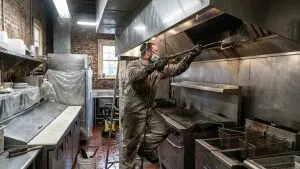
Every time a range, fryer, or grill is in use, grease particles become airborne and get pulled into the exhaust hood above the cooking line. From there, they travel through the ductwork on their way to the rooftop exhaust fan. Along the way, a portion of that grease condenses on the interior surfaces of the duct, especially at bends, joints, and any section where airflow slows down.
A single busy kitchen can generate enough grease residue to coat ductwork in a matter of weeks. Multiply that across months of continuous operation and the buildup becomes substantial, even in a kitchen that looks spotless on the surface.
What Grease Buildup Actually Puts at Risk
The core problem with greasy ductwork is straightforward: grease is combustible, and kitchen exhaust systems sit directly above heat sources that produce flames, sparks, and high surface temperatures. A grease fire that starts at the stovetop can travel up into the hood and ductwork if there’s enough buildup to sustain it, turning a contained cooking fire into a structure fire that spreads through the exhaust system.
Beyond the fire risk, heavy grease accumulation restricts airflow through the exhaust system. That means smoke, heat, and cooking odors don’t clear from the kitchen as effectively, which affects both staff working conditions and how quickly a kitchen can respond if something does go wrong on the line.
Health Department and Insurance Considerations
Commercial kitchen exhaust systems are subject to inspection requirements tied to fire codes, and insurers often ask for documentation of regular exhaust cleaning as part of a restaurant’s coverage. A kitchen that can’t produce records of routine duct maintenance may face complications with inspections or claims if a fire does occur. Specific requirements and documentation standards vary by jurisdiction and insurer, so restaurant owners should confirm what their local authority and policy require.
Signs Your Kitchen Exhaust System Needs Attention
A few signs tend to show up before grease buildup becomes a serious hazard:
- Visible grease residue at the hood opening or along accessible duct sections
- Reduced airflow at the hood, with smoke or heat lingering in the kitchen longer than usual
- A persistent greasy or burnt odor that doesn’t clear even after cleaning the hood filters
- Grease dripping from the hood or visible staining on the ceiling near exhaust fans
- It’s been longer than your last scheduled cleaning interval, regardless of visible signs
Because grease buildup happens gradually and out of sight for most of the ductwork, relying only on what’s visible at the hood can miss significant accumulation further down the line.
What Our Commercial Duct Cleaning Service Covers
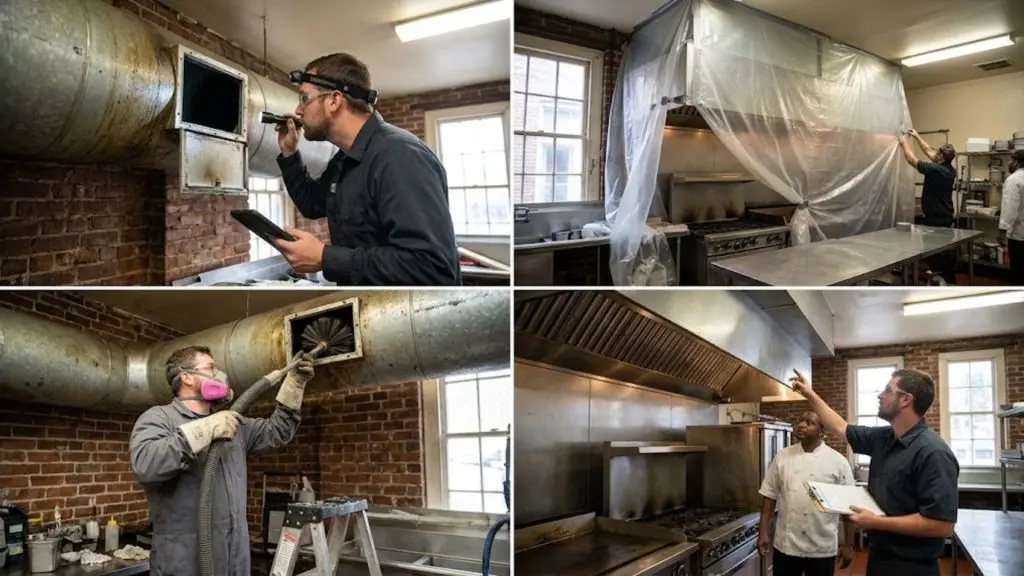
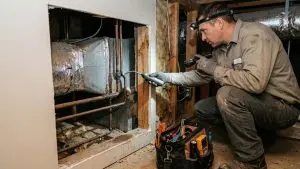
When we clean ductwork for a Savannah restaurant or commercial kitchen, we start with a thorough inspection to see how much buildup has accumulated and where it’s concentrated, since grease doesn’t collect evenly across a duct run. From there, we use HEPA-filtered vacuums and rotary brush equipment suited to clearing grease and debris from duct interiors without damaging the system itself.
We seal off the work area during cleaning so loosened debris stays contained rather than spreading into the kitchen, and we follow up with a post-cleaning inspection to confirm the ductwork has been cleared thoroughly. We also walk kitchen managers through what to expect before the next cleaning is due, so maintenance doesn’t fall through the cracks between service visits.
How Commercial Duct Cleaning Differs from Residential Service
Commercial kitchen exhaust systems see far heavier use than a residential HVAC duct system, and the contaminant is different, grease residue instead of household dust and allergens. That means commercial jobs typically take longer, require more thorough equipment access, and need to happen on a tighter interval than a home would ever require. A kitchen running multiple shifts a day is going to need attention far more often than a quiet household system.
Building a Maintenance Schedule That Fits Your Kitchen
The right cleaning interval depends on how much your kitchen cooks, what you’re cooking, and how your exhaust system is configured. A high-volume fry station generates more grease than a kitchen focused on salads and cold prep, and that difference should shape how often ductwork gets cleaned. Working with your restoration or cleaning provider to set a schedule based on your actual kitchen volume, rather than a generic calendar reminder, is the more reliable way to stay ahead of buildup.
Who Should Prioritize Commercial Duct Cleaning
Not every commercial kitchen generates grease at the same rate, which means not every kitchen needs the same attention. Full-service restaurants running fryers and open flame grills through multiple daily shifts tend to accumulate grease the fastest and typically need the most frequent attention. Catering kitchens and commissaries that run high-volume batch cooking on a tighter schedule can build up residue quickly as well, even if their hours look different from a sit-down restaurant.
Quick-service kitchens with lighter cooking methods, like sandwich shops or coffee counters with minimal frying, generally see slower buildup, though they’re not exempt from needing a maintenance schedule altogether. Any kitchen with an active exhaust hood is moving grease-laden air through ductwork constantly, and the only real variable is how quickly that residue accumulates to a point that matters.
A kitchen manager who isn’t sure where their operation falls on that spectrum is better served by having a professional assess the actual ductwork rather than guessing based on how the kitchen looks on the surface.
Frequently Asked Questions
How Often Should Restaurant Kitchen Ducts Be Cleaned?
It depends on your cooking volume and equipment, with high-volume frying and grilling operations typically needing more frequent cleaning than lighter-use kitchens. Your local fire code and insurer requirements may also set a minimum interval.
Can Grease in Ductwork Really Start a Fire?
Yes. Grease is combustible, and buildup inside exhaust ductwork sits directly above or near active heat sources, giving a kitchen fire a path to spread through the exhaust system if there’s enough residue to sustain it.
Is Commercial Duct Cleaning Different From Cleaning the Hood Filters?
Yes. Hood filters are typically cleaned far more often and only address the first stage of grease capture. Full duct cleaning addresses the ductwork beyond the filters, where significant buildup can still accumulate even with regular filter maintenance.
Do I Need Documentation of Duct Cleaning for Inspections or Insurance?
Many insurers and local fire authorities expect records showing regular exhaust system maintenance. Requirements vary, so it’s worth confirming exactly what your policy and local code require.
What Happens if I Skip a Scheduled Cleaning?
Buildup continues to accumulate past whatever level your system was designed to handle, which increases fire risk and can also reduce exhaust airflow, affecting kitchen conditions and cooking line safety.
Final Takeaways on Commercial Duct Cleaning in Savannah, GA
Grease buildup inside kitchen exhaust ductwork is a slow, mostly invisible process that carries a very real fire risk once it accumulates past a safe threshold. Staying ahead of it means cleaning on a schedule that matches your kitchen’s actual cooking volume, not just when a problem becomes visible.
If your Savannah restaurant hasn’t had its exhaust ductwork professionally inspected and cleaned recently, our team at Enviro Professional Response can assess your system, clear out accumulated grease and debris, and help you set a maintenance schedule that fits how your kitchen actually operates.