
Most homeowners never see the moment an HVAC system starts leaking. The leak happens behind a wall, above a ceiling, or inside a condensate line long before anyone notices a problem. By the time water stains or a musty smell show up, the leak has often been active for weeks.
In Savannah’s humid climate, that delay matters. Moisture that sits inside ductwork or around an air handler has everything it needs to turn into a mold problem fast. A leak that would dry out on its own in a drier region can linger here and keep feeding damage.
This article walks through the early warning signs of a hidden HVAC leak, why Savannah homes are especially exposed, what happens if a leak goes unaddressed, and what our team does when we’re called in for HVAC leak repair in Savannah, GA.
Why Hidden HVAC Leaks Are Common in Savannah Homes
Savannah’s coastal humidity keeps HVAC systems working harder for more of the year than systems in drier climates. Air conditioners run longer, condensate lines carry more water, and refrigerant lines sit under more thermal stress. All of that adds up to more opportunities for a leak to start.
Older duct systems in Savannah’s historic and mid-century housing stock are another factor. Ductwork that was sealed decades ago has had time for seams to loosen, insulation to break down, and small gaps to open at joints. None of that is visible from inside a living space, which is exactly why these leaks go unnoticed for so long.
Warning Signs Homeowners Often Miss
A hidden HVAC leak rarely announces itself with an obvious puddle. It shows up in smaller, easier-to-dismiss ways first. Watch for the following:
- Unexplained increases in your energy bill, even though your usage habits haven’t changed
- Uneven temperatures between rooms, with some areas never quite reaching the thermostat setting
- Weak airflow at vents that used to feel strong
- Hissing, bubbling, or dripping sounds coming from ductwork, the air handler, or refrigerant lines
- A musty or damp smell near the HVAC equipment, vents, or a nearby closet
- Visible moisture, discoloration, or soft spots on ceilings or walls near ductwork
Any one of these on its own could have a simple explanation. Two or three happening together is a stronger sign that water or refrigerant is escaping somewhere in the system.
What Is Actually Leaking?
Not every HVAC leak is the same, and the type of leak changes both the risk and the fix.
1. Refrigerant Leaks
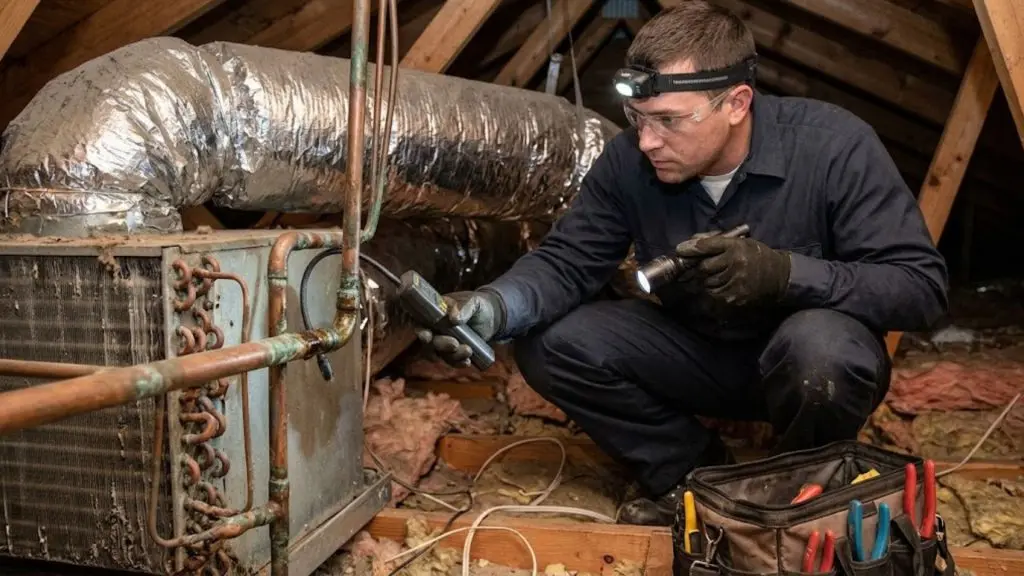
Refrigerant leaks reduce your system’s ability to cool the air, which is usually what drives up energy bills as the unit runs longer to compensate. These leaks often come from worn seals, coil corrosion, or vibration-related wear at connection points over time.
2. Duct Leaks
Duct leaks let conditioned air escape into attics, crawl spaces, or wall cavities instead of reaching your living space. They also pull in unconditioned, often humid outside air, which affects both comfort and indoor air quality.
3. Condensate Drain Line Leaks
Every air conditioner produces condensation that is supposed to drain away through a dedicated line. When that line clogs or disconnects, water backs up and finds the nearest low point, which is often a ceiling below the attic-mounted air handler.
What Happens if a Leak Goes Unaddressed
A small leak rarely stays small. Refrigerant leaks get worse as seals continue to degrade, eventually leaving a system unable to cool a home at all. Duct and condensate leaks introduce ongoing moisture into spaces that were never designed to handle it, which is where Savannah’s humidity becomes a serious problem.
Moisture trapped inside a wall cavity or above a ceiling, combined with warm, humid air, creates close to ideal conditions for mold growth. What started as an HVAC inefficiency can turn into a mold remediation project, drywall replacement, and a much larger repair bill than the original leak ever needed to cause.
How We Find and Repair Hidden HVAC Leaks
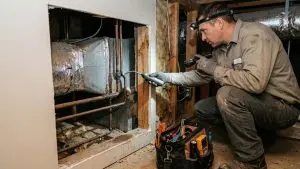
When our team responds to an HVAC leak call in Savannah, we start with a comprehensive inspection that checks refrigerant pressure, ductwork integrity, and drain lines rather than guessing at the source. From there, we use thermal imaging cameras, ultrasonic detectors, and refrigerant leak sensors to locate leaks with precision, including ones hidden behind finishes where a visual inspection alone would miss them.
Once we’ve confirmed the source, we move to targeted repairs, which might mean duct sealing, refrigerant line service, or clearing and correcting a condensate drain, depending on what we found. We follow safety protocols to contain the work area and prevent cross-contamination while repairs are underway, then run post-repair testing to confirm the leak is resolved and the system is operating correctly. Before we leave, we walk homeowners through preventive maintenance guidance so the same issue is less likely to come back.
When to Call a Professional Instead of Waiting
Some HVAC issues are safe to monitor for a little while. A hidden leak isn’t one of them, because the damage it causes often happens somewhere you can’t see. If you notice rising energy bills alongside weak airflow, strange sounds near your equipment, or any hint of moisture or musty odor near ductwork, it’s worth having the system checked before those signs turn into a bigger repair.
This is especially true if you’ve already dealt with water damage or mold in the past. A home that has had moisture problems before is more vulnerable to a repeat issue, and catching an HVAC leak early is a lot less disruptive than remediating mold growth that had weeks to spread.
Frequently Asked Questions
How Do I Know if My HVAC Leak Is Refrigerant or Water?
A refrigerant leak typically shows up as reduced cooling performance and rising energy bills without any visible moisture. A water-related leak, from ductwork or a condensate line, usually comes with visible dampness, staining, or a musty smell near the equipment or vents.
Can a Small HVAC Leak Really Cause Mold?
Yes, especially in Savannah’s humid climate. Moisture trapped inside a wall cavity or ceiling space combined with warm, humid air gives mold what it needs to start growing, often within days of sustained dampness.
Will Sealing a Duct Leak Lower My Energy Bill?
In many cases, yes. Air escaping through duct leaks means your system has to run longer to maintain the same indoor temperature, so sealing those leaks helps the system work more efficiently.
Is It Normal for an AC Unit to Make Noise?
Some operational sound is normal, but hissing, bubbling, or dripping noises are not. Those sounds often point to refrigerant escaping under pressure or water moving somewhere it shouldn’t be.
How Often Should I Have My HVAC System Inspected for Leaks?
An annual inspection is a reasonable baseline for most homes, but if you’ve noticed any of the warning signs above, it’s worth having the system checked sooner rather than waiting for the next scheduled service.
Final Thoughts on HVAC Leak Repair in Savannah, GA
A hidden HVAC leak is easiest to deal with before it turns into a moisture or mold problem. Rising energy bills, weak airflow, strange sounds, and musty smells near your equipment are all signs worth taking seriously rather than waiting out.
If you’re noticing any of these signs in your Savannah home, our team is ready to inspect your system, pinpoint the source with thermal imaging and leak detection equipment, and make the repair before it turns into something bigger. Reach out to Enviro Professional Response and we’ll get your HVAC system checked out properly.