
A burst pipe, an overflowing water heater, or a slow leak behind a wall can turn into a serious problem fast, especially in a city like Savannah where humidity is already working against you. If you’ve never dealt with a significant water intrusion before, it helps to know what water damage restoration actually involves before you’re in the middle of it.
This guide walks through the common causes of water damage in Savannah homes, what to do right after you find it, and each step of the professional restoration process, so you know what a legitimate water damage restoration job should look like from start to finish.
Common Causes of Water Damage in Savannah Homes
Water damage doesn’t always come from a dramatic event. Some of the most common sources in Savannah homes include:
- Plumbing failures, including burst pipes, failed supply lines, and slow leaks under sinks or behind walls that go unnoticed for weeks.
- Water heater failures, which can release a large volume of water quickly once a tank ruptures.
- Appliance leaks from washing machines, dishwashers, or refrigerator ice makers.
- Roof and window leaks, which let rainwater in during Savannah’s frequent summer thunderstorms and can worsen during hurricane season.
- HVAC condensation issues, particularly in a humid climate where air conditioning systems run heavily for much of the year and condensate lines can clog or back up.
- Crawl space moisture, common in many of Savannah’s older homes built with raised foundations and crawl spaces rather than slab construction.
Because Savannah’s climate keeps humidity high for most of the year, even a moderate water intrusion can lead to bigger problems if it’s not addressed quickly.
Warning Signs of Water Damage You Shouldn’t Ignore
Some water damage is obvious, but a lot of it starts quietly. Watch for:
- Discoloration or staining on ceilings, walls, or baseboards
- A musty smell in a room, closet, or crawl space
- Warped, buckling, or soft flooring
- Peeling paint or bubbling drywall
- Unexplained increases in your water bill
- Visible mold spots, especially in bathrooms, closets, or crawl spaces
If you notice any of these, it’s worth investigating further rather than waiting to see if the problem resolves on its own.
What to Do When You Discover Water Damage
Should you turn off the water first? Yes, if the source is an active leak or burst pipe, shutting off the water supply, either at the fixture or the main shutoff valve, is the first priority before anything else.
After that:
- Turn off electricity to the affected area at the breaker if water is anywhere near outlets, switches, or appliances.
- Photograph and video the damage before moving items or beginning cleanup, for your records and your insurance claim.
- Move furniture, rugs, and valuables out of the affected area if it’s safe to do so.
- Contact a water damage restoration company as soon as possible. In Savannah’s humid climate, the window before mold becomes a concern is shorter than in drier regions.
- Contact your insurance provider to start the claims process.
How Long Does Water Damage Restoration Take?
Restoration timelines depend on how much water was involved, which materials it affected, and how long the area was wet before work began. Rather than a fixed number of days, professional drying continues until moisture readings in the affected materials reach an acceptable level compared to unaffected parts of the home, confirmed through ongoing monitoring.
A small, contained leak addressed quickly may dry out in a few days, while a larger intrusion affecting multiple rooms or a crawl space can take longer.
The Professional Water Damage Restoration Process
Inspection and Moisture Assessment
A technician inspects the affected area, identifies the source and extent of the water intrusion, and checks flooring, drywall, subfloor, and framing for moisture that isn’t visible on the surface. This step determines what can be dried in place and what may need to be removed.
Water Extraction
Standing water is removed with extraction equipment sized to the amount present. Getting bulk water out quickly matters because every hour it sits in carpet, padding, or subflooring increases how much moisture has to be dried out afterward.
Structural Drying
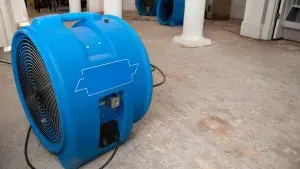
Air movers circulate air across wet surfaces to help release trapped moisture from flooring, walls, and other materials, while dehumidifiers pull that moisture out of the surrounding air so it doesn’t resettle. Equipment placement and quantity depend on the size of the affected area and how saturated the materials are.
Moisture Monitoring
Technicians use moisture meters to track drying progress throughout the process, checking affected materials against unaffected areas of the home until they reach a documented drying standard. This measurement-based approach is what distinguishes professional structural drying from running a few fans and hoping for the best.
Cleaning and Sanitizing
If the water source involves contamination, such as a sewage backup, additional cleaning and sanitizing procedures are needed beyond standard extraction and drying, since contaminated water carries different health and safety considerations.
Repairs and Restoration
Once the structure is fully dry, any materials that had to be removed, such as drywall or flooring, are repaired or replaced to bring the space back to its condition before the water damage occurs.
Water Damage and Mold Risk in Savannah’s Climate
Savannah’s humid subtropical climate means mold risk is a real factor after almost any water intrusion, not just major flooding events. Wet materials sitting in a warm, humid environment can begin supporting mold growth faster than they would in a drier climate. If water damage in your home isn’t fully dried and monitored, or if it goes unnoticed for a period of time, it’s worth having the area evaluated for mold, since visible drying doesn’t always mean moisture is gone from inside walls or subflooring. A dedicated mold remediation assessment can catch what a quick visual check misses.
When to Contact Enviro Professional Response for Water Damage Restoration in Savannah, GA
Whether it’s a burst pipe, a failed appliance, or water that made its way in during a storm, the safest move is to have it assessed and addressed quickly rather than waiting to see how it dries.
Enviro Professional Response provides water damage restoration, along with fire damage restoration, mold remediation, and air duct cleaning, for homes and businesses throughout Savannah and the surrounding Georgia coastal region. If your property has water damage, contact Enviro Professional Response to get the assessment and restoration process started.
Frequently Asked Questions
Does homeowners insurance cover water damage in Savannah, GA?
It depends on the cause. Sudden and accidental water damage, like a burst pipe, is typically covered under a standard homeowners policy, while damage from gradual leaks that went unaddressed over time may not be. Flooding from an outside water source generally requires separate flood insurance. Review your specific policy or speak with your provider to confirm coverage.
How fast can mold grow after water damage in Savannah?
Mold growth depends on temperature, humidity, and how long materials stay wet, and Savannah’s warm, humid conditions can shorten that timeline compared to drier climates. Standing water and saturated materials should be addressed as quickly as possible rather than left to dry naturally.
Can I dry out water damage myself with fans and a dehumidifier from the store?
For very small, contained spills, basic drying may be enough. For anything more significant, consumer equipment usually isn’t powerful enough to fully dry materials like subflooring or wall cavities, and moisture can remain trapped even when the surface looks dry. Professional equipment and moisture monitoring catch what’s left behind.
What's the difference between water damage restoration and mold remediation?
Water damage restoration focuses on extracting water and drying the structure to stop damage from spreading. Mold remediation addresses mold growth that has already started, which can happen if moisture wasn’t fully removed or went unnoticed for a period of time. The two are often connected, since incomplete drying is one of the main causes of mold after a water event.
Do I need to leave my home during water damage restoration?
It depends on the extent of the damage. Minor, localized water intrusion often allows you to stay in unaffected parts of the home. More extensive damage, particularly involving a large area, standing water, or contamination, may require temporary relocation. A technician can advise based on your specific situation.
What should I do if I find water damage in a crawl space?
Crawl space water intrusion is common in many of Savannah’s older homes with raised foundations. Because crawl spaces are enclosed and harder to ventilate, moisture can linger longer and create ideal conditions for mold. Have it inspected and dried professionally rather than assuming it will dry out on its own.